 家
家
MINECRAFT MAGAZINE
JULY 2026
建築 // THE BUILD GUIDE
Learn Japanese
Architecture for Minecraft
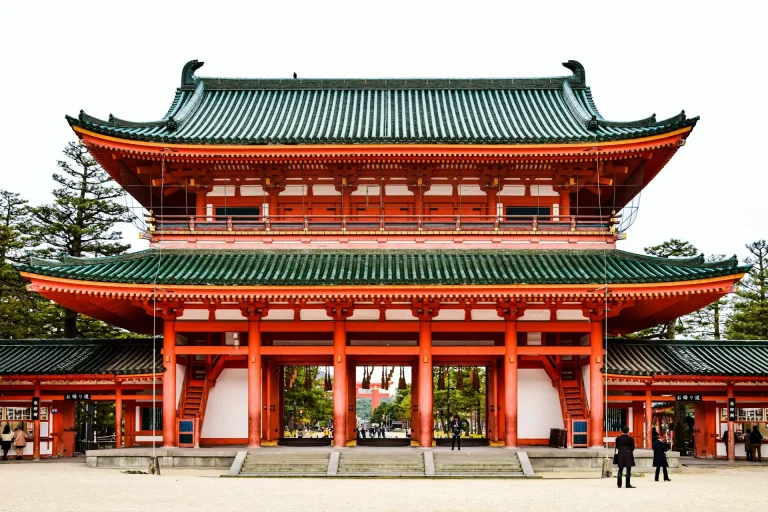
THE REAL THING
START HERE
How to build Japanese houses in Minecraft.
Most "Japanese-style" Minecraft builds copy the look and skip the logic. A curved roof here, some white panels there, a few lanterns — and it still reads like a box wearing a costume. This book is the opposite. We start with why these houses are shaped the way they are, then turn each idea into blocks you can actually place.
It's written for intermediate builders — people who can already put up walls and a roof, and now want their houses to feel calm, deliberate, and unmistakably Japanese.
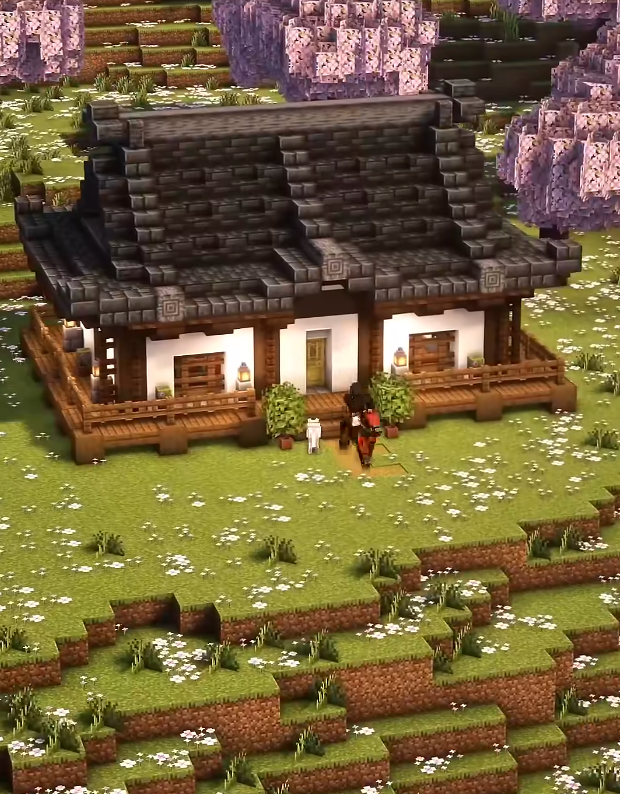
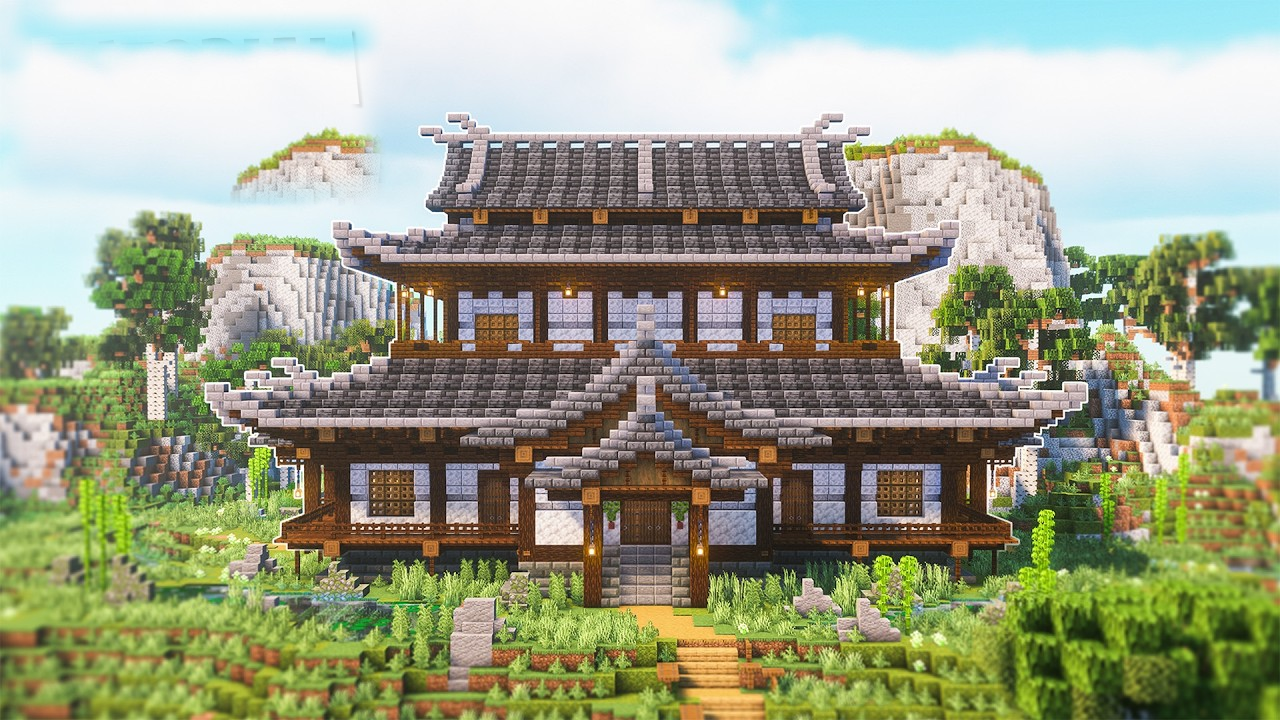
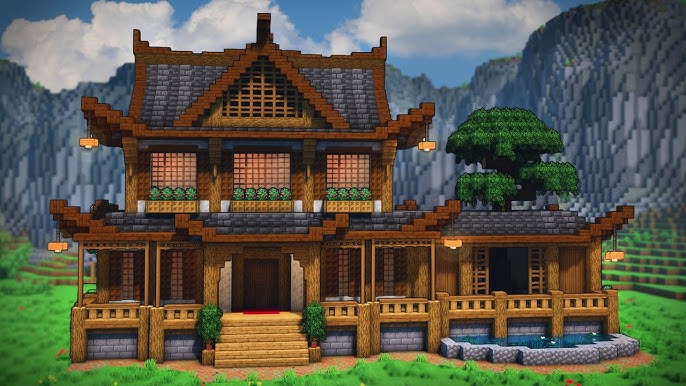
A finished house in Minecraft — every idea in this book, made of blocks. Ma, the deep sweeping roof, the engawa edge, the tight palette. Learn the principle first; then place the blocks.
PART ONE
Principles
The ideas — Ma, restraint, proportion, light, and site.
PART TWO
The Blocks
Elements, step-by-step build tips, palettes, and worked examples.
目次
Contents
THE ELEMENTS
THE PRINCIPLES
BUILD & REFERENCE
What this book is
This is a short, practical guide to building Japanese houses in Minecraft that actually feel right — not a history lecture. It takes the core concepts of Japanese design and links each one straight to the blocks you place.
Every concept gets the same three-step treatment, so you always know what to do with it. Read straight through, or jump to the one you need — the concepts stack, and getting a handful of them right makes almost anything you build read as Japanese.
01
The idea
The concept, plus a reference image.
02
Build it as
The exact Minecraft blocks to use.
03
In Minecraft
A shot of it built in-game.
Don't build a Japanese-looking box. Build the decisions a Japanese house makes — and let the look take care of itself.
Before you place a single block
A few practical decisions up front will save you from tearing the whole thing down later. None of these are about looks — they're about giving yourself a frame to work inside.
Pick a scale and stick to it.
Decide what one block represents. A 1-storey minka usually wants ceilings 3–4 blocks high and rooms 5–9 blocks wide. Going bigger feels grand; going smaller feels like a doll's house.
Lay the floor plan flat first.
Mark the footprint on the ground with a cheap block before you build up. Walk it. If the rooms feel cramped or aimless at ground level, no roof will fix that.
Choose your palette before building.
Three or four blocks for structure, one for the roof, one for walls. Write them down. Every time you reach for a fifth "just because", you're drifting away from the tradition.
Build the roof early — not last.
In a Japanese house the roof is most of the silhouette. Block it out before you finish the walls, so the eaves, pitch, and overhang drive the rest of the design.
Build in Creative on a flat or gentle-slope world first to get the proportions right, then rebuild on your real site. A free-camera mod or spectator mode helps enormously for judging the roofline from a distance.
What we're aiming for
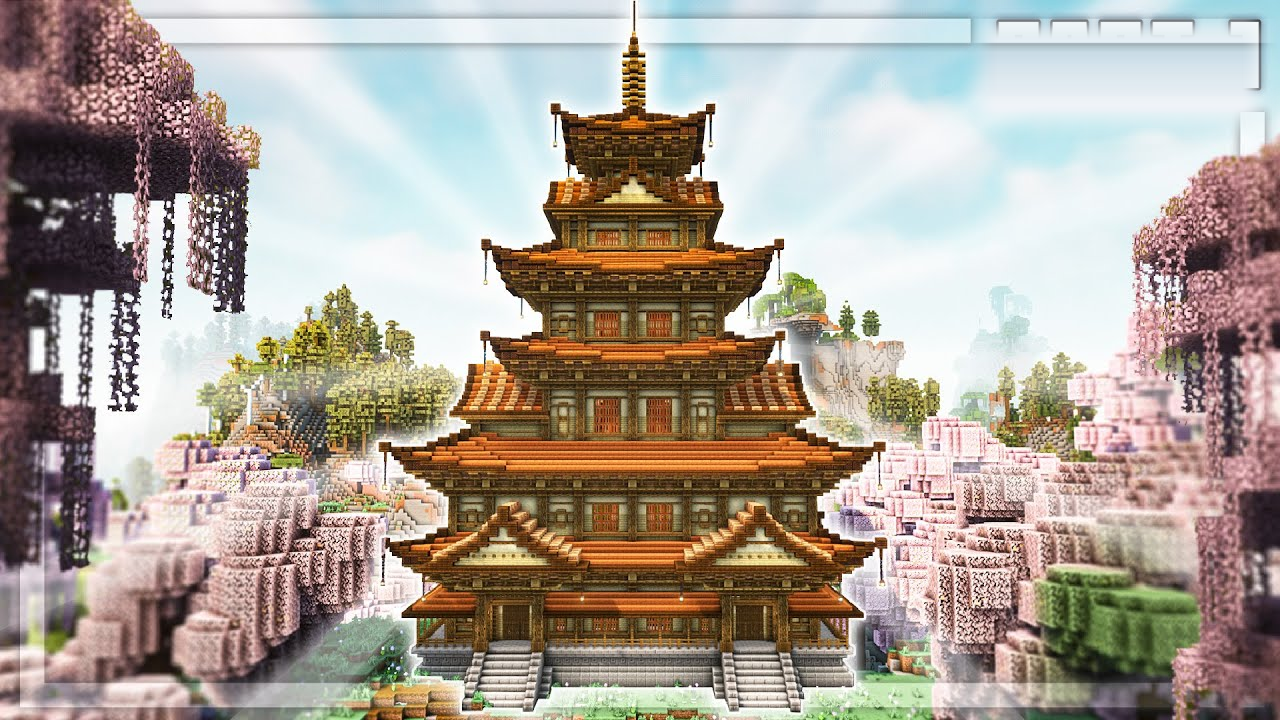
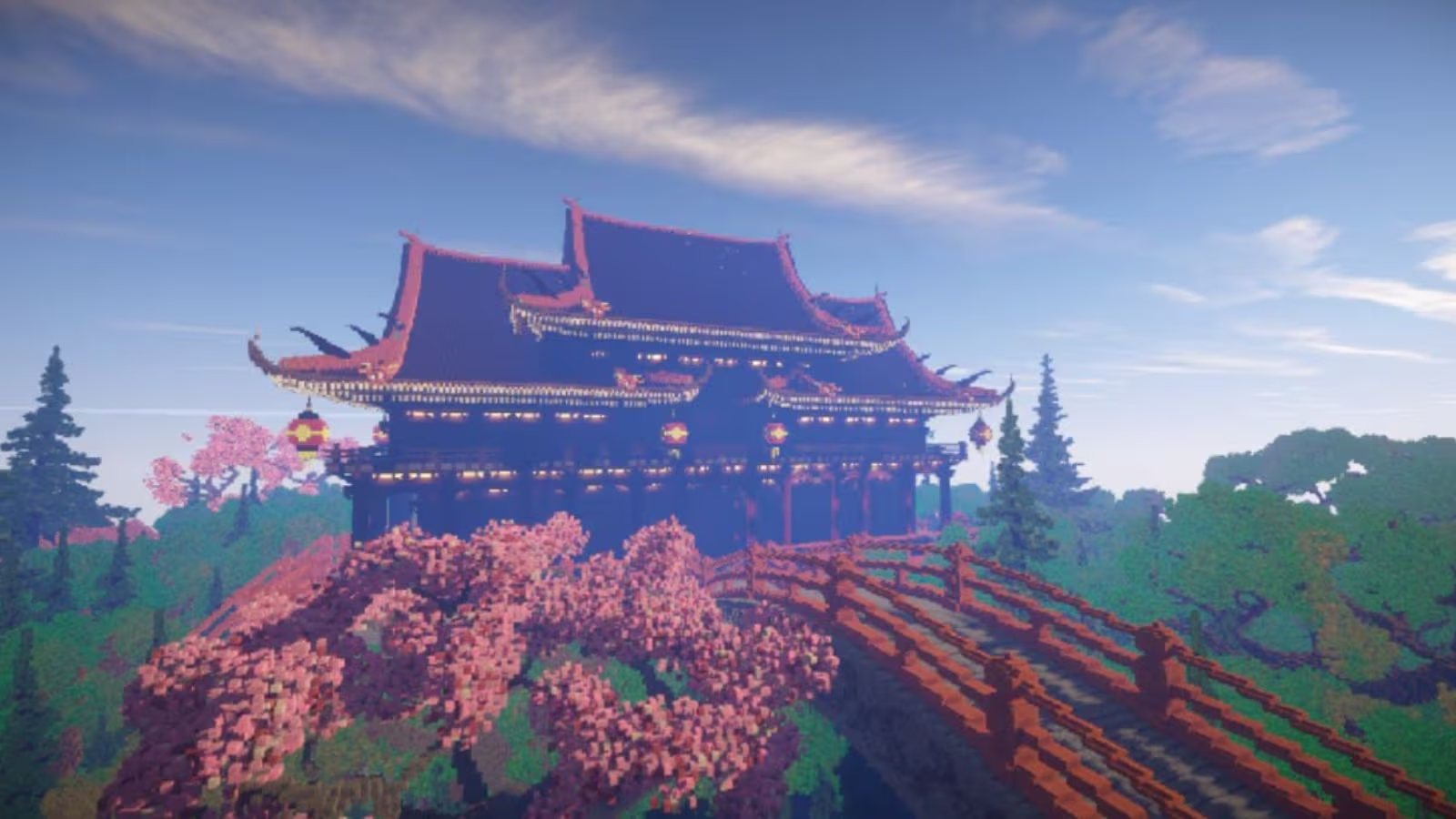
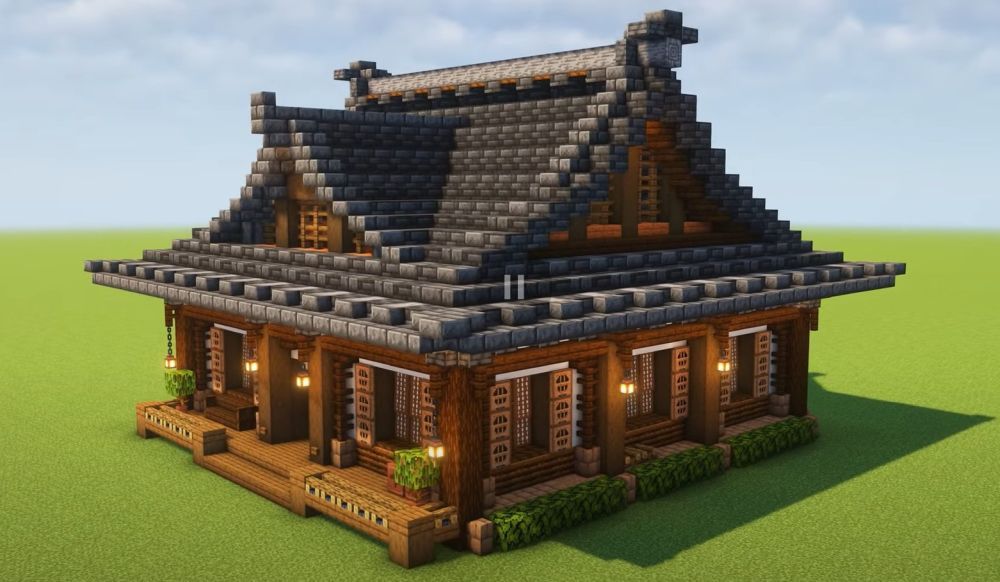
Before the techniques, a wall of builds to set the bar — farmhouses, townhouses, temples and pagodas, all made of blocks. Keep coming back to these as you read.
TSUBO-NIWA
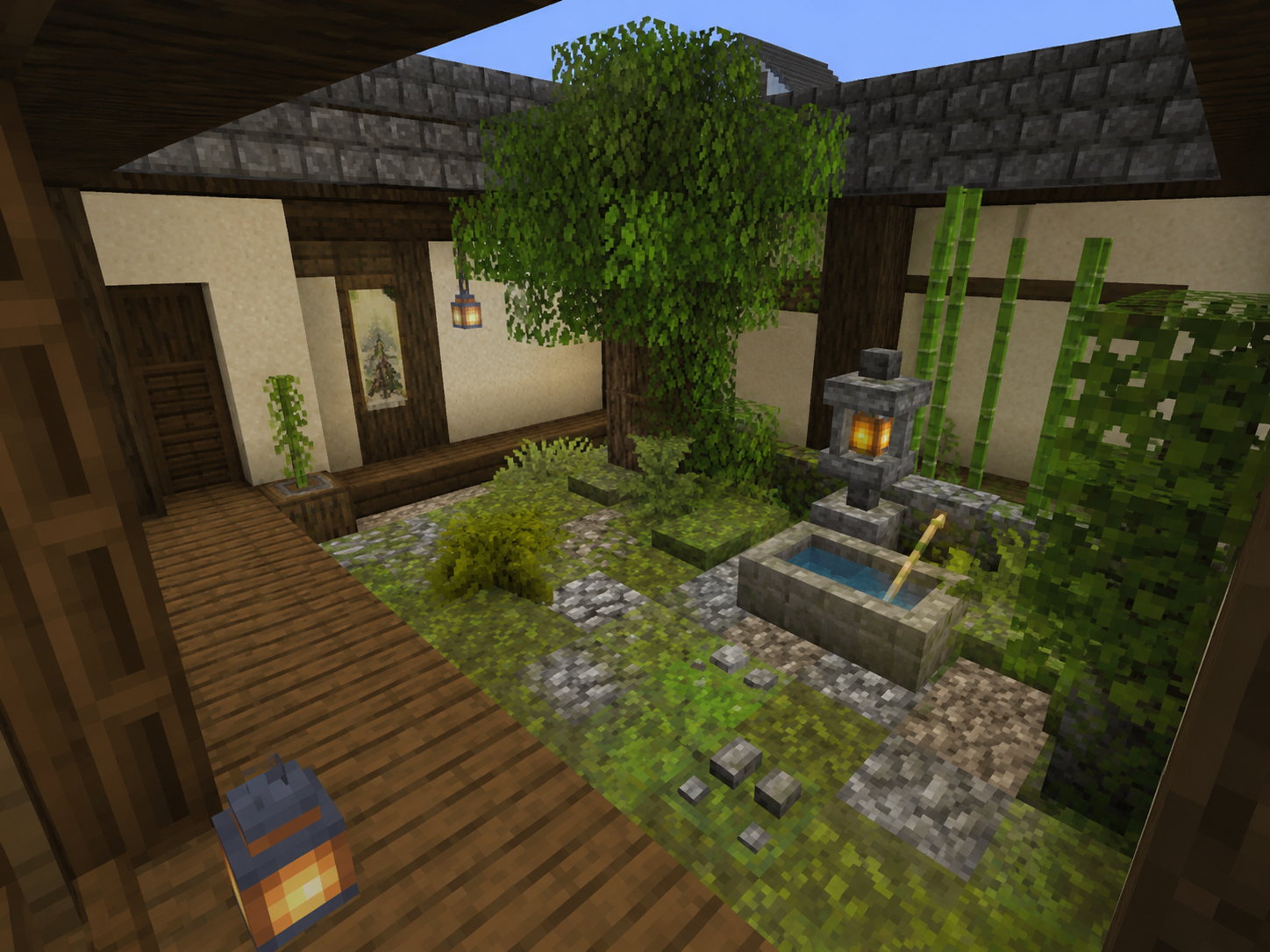
The courtyard garden — a small pocket of sky, light and nature set right in the heart of the house.
A garden you wrap the house around
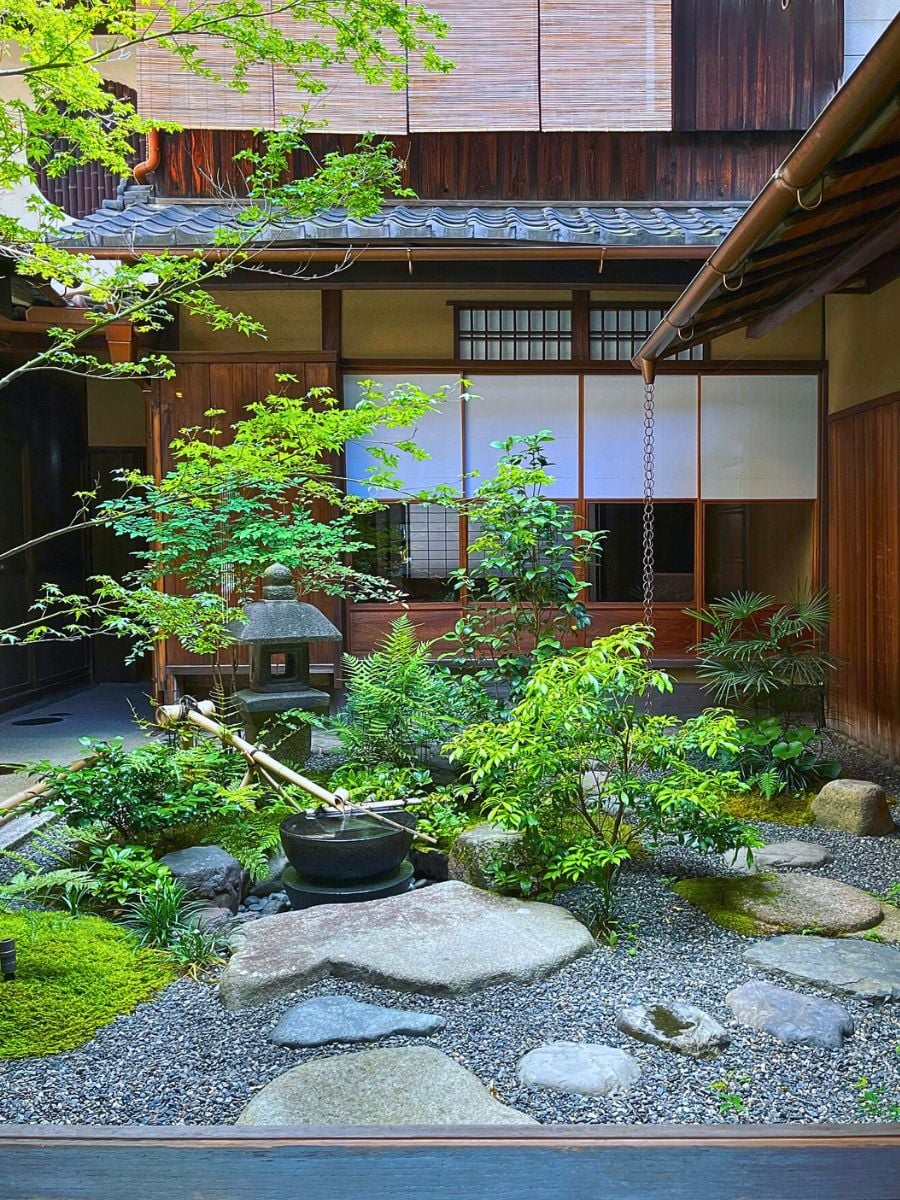
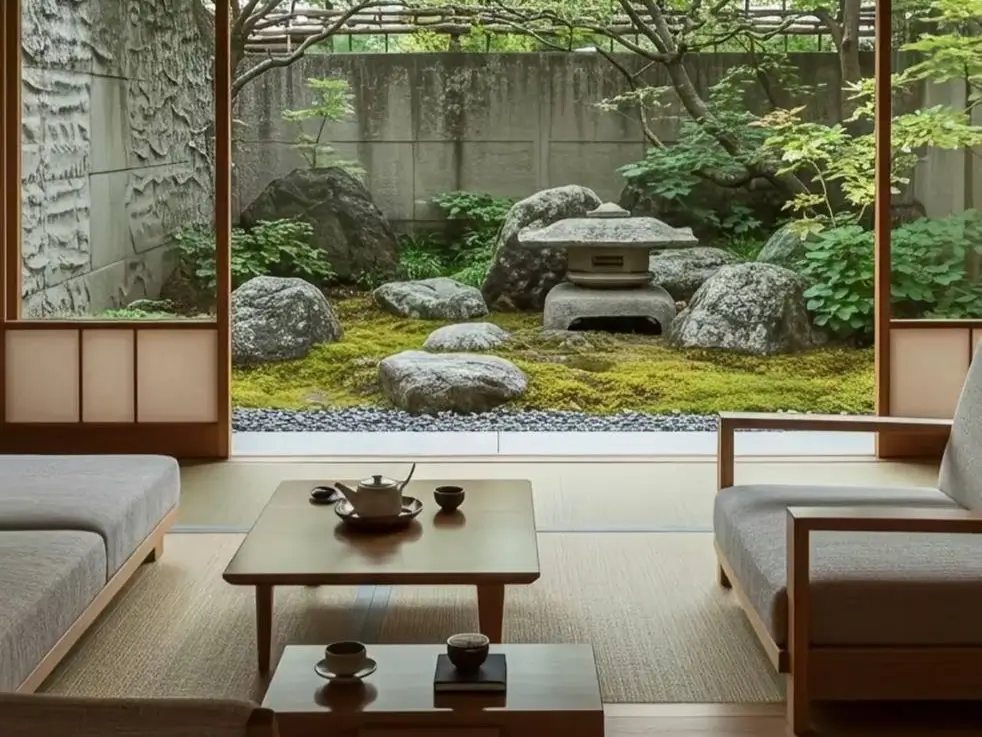
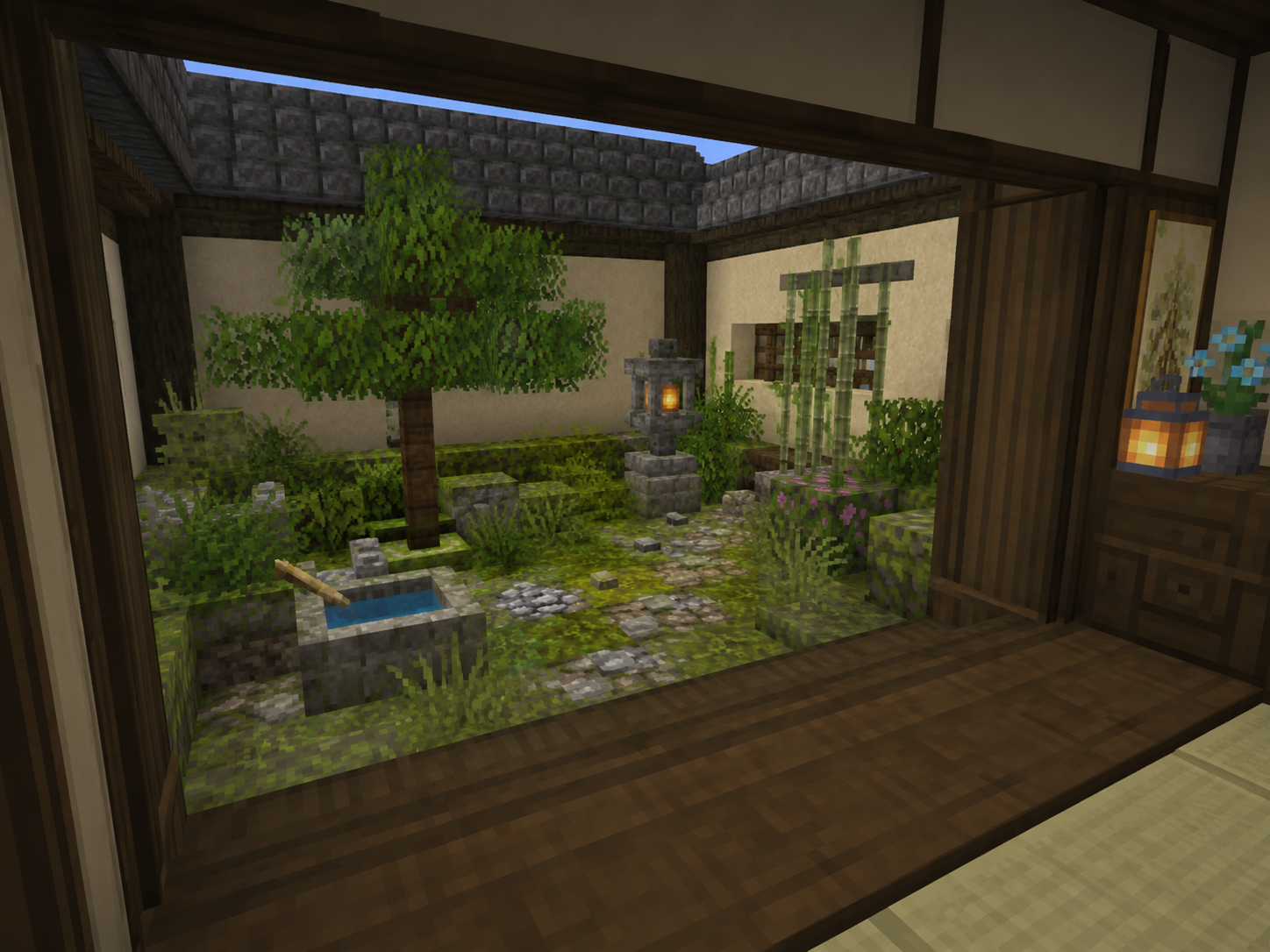
A tsubo-niwa is a tiny enclosed courtyard garden — often just a few blocks square — tucked inside the house. In the deep, narrow machiya of Kyoto it was the only way to pull daylight, air and a scrap of nature into rooms far from the street. It is pure Ma: mostly empty, a few perfect things, framed on every side by the building.
Build it from these blocks

Moss Block
ground cover

Gravel
stepping path

Cauldron
water basin

Bamboo
corner screen

Lantern
stone lantern (tōrō)

Oak / Azalea
the one tree
The walls do the work. Because the courtyard is fully enclosed, even three or four elements read as a complete world — and every surrounding room gets a quiet view and a shaft of daylight.
Two ways to build one
The same idea reads two ways — a dry, raked karesansui court, or a lush mossy one with a water basin. Both stay enclosed and mostly empty.
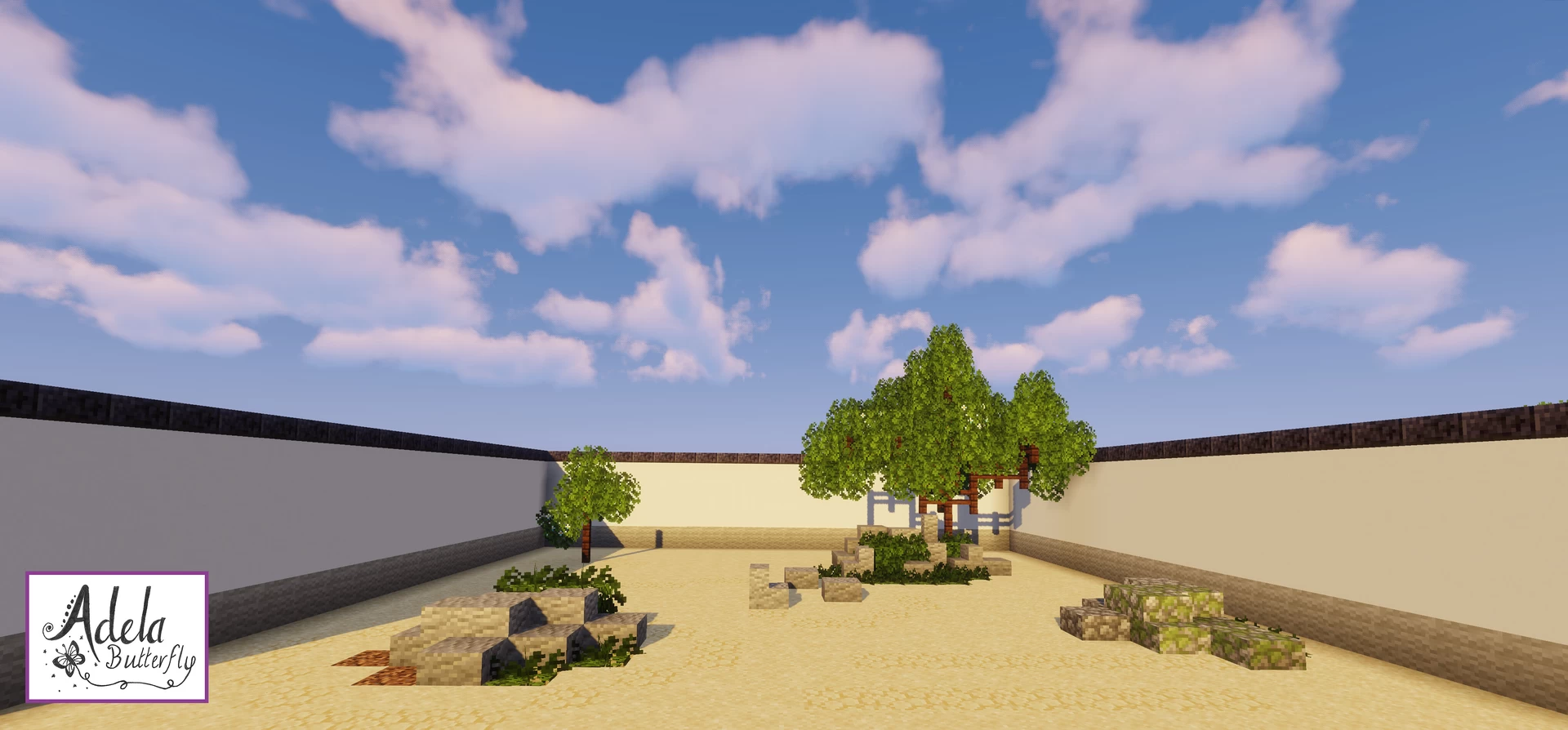
Dry court: pale sand, a few rock groupings, two small trees. The emptiness is the design.
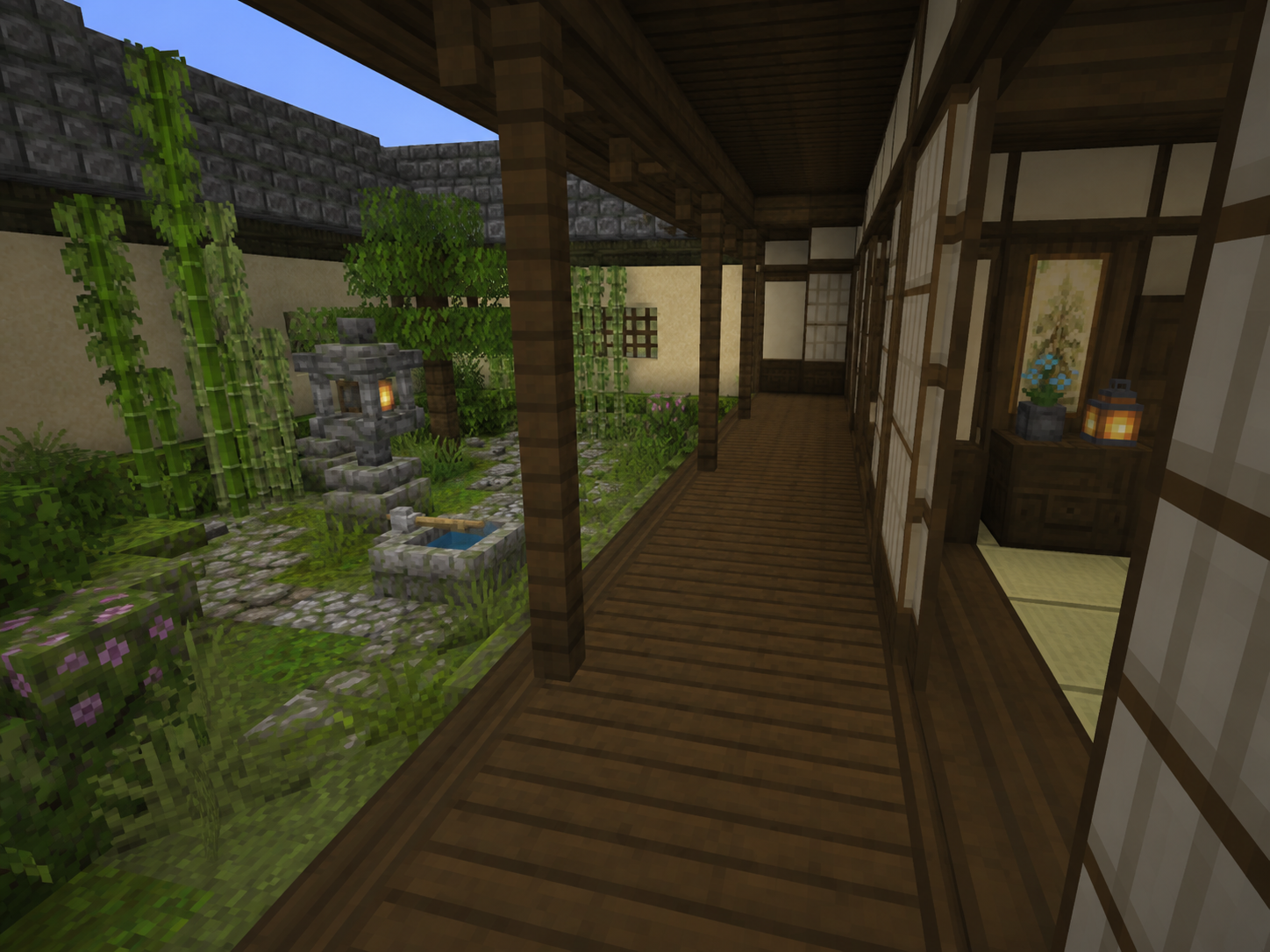
Lush court: moss and gravel, a stone lantern, bamboo, and a cauldron water basin under one tree.
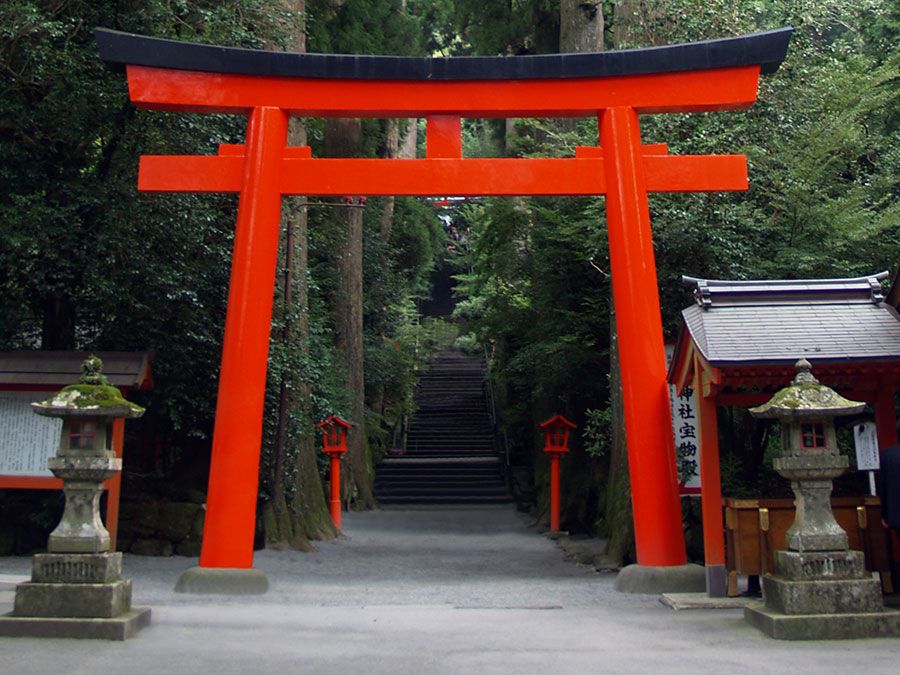
The real thing — a Kyoto tsuboniwa: lantern, water basin, maple and moss against shoji.
Another courtyard to compare — note how little it takes to feel complete.
Get it right
THE ENGAWA
The sheltered wooden edge where the house dissolves into its garden.
The edge that is neither in nor out
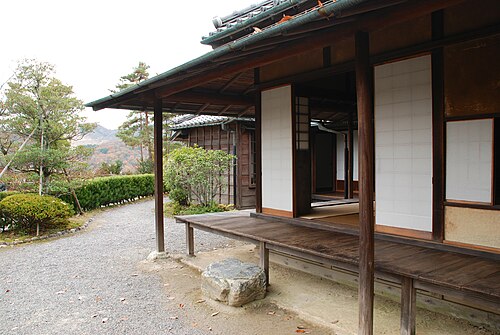
The engawa is the wooden veranda strip that runs along the outside of the house, tucked under the deep eaves. It is the threshold between the polished tatami interior and the garden — not quite a room, not quite outside.
It does several jobs at once. It is a sheltered walkway linking rooms, a weather buffer that keeps rain off the paper screens, a bench for watching the garden, and a social edge where you can receive a visitor without bringing them inside. In summer the screens slide right away and the engawa dissolves the wall completely — room, veranda and garden become one continuous space.
This is the architecture of the in-between — the prized "grey space" where inside and outside overlap. It is where Ma and borrowed scenery meet, and it is the single move that ties a Japanese house to its garden.
Build it as
_JE1_BE2.webp) Stripped Spruce / Bamboo · deck
Stripped Spruce / Bamboo · deck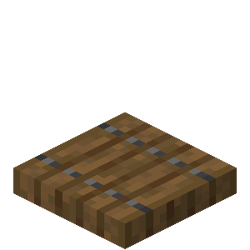 Spruce Trapdoor · skirt
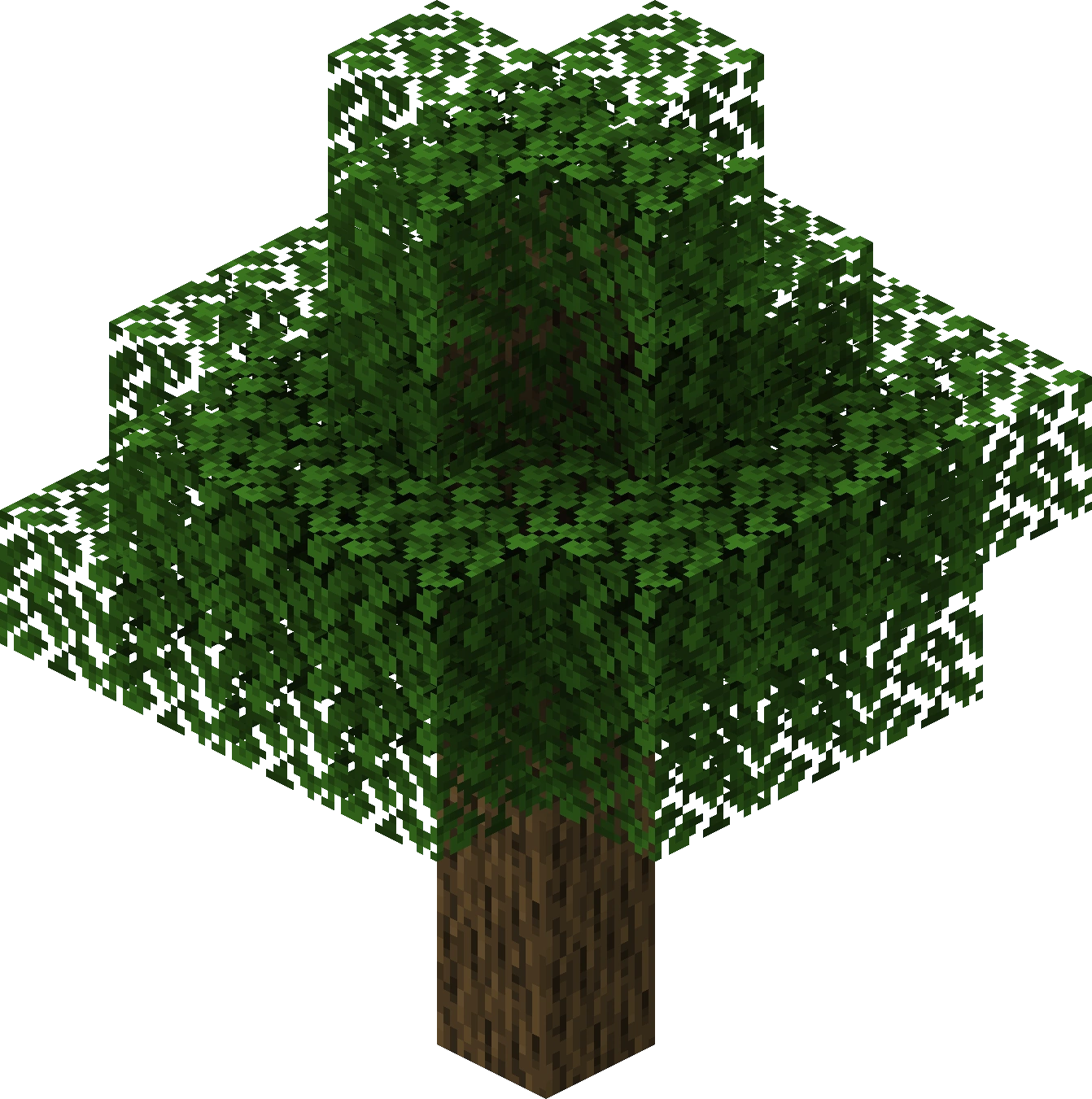 Stripped Log · eave posts
 Smooth Stone · step (kutsunugi-ishi)
Building the edge
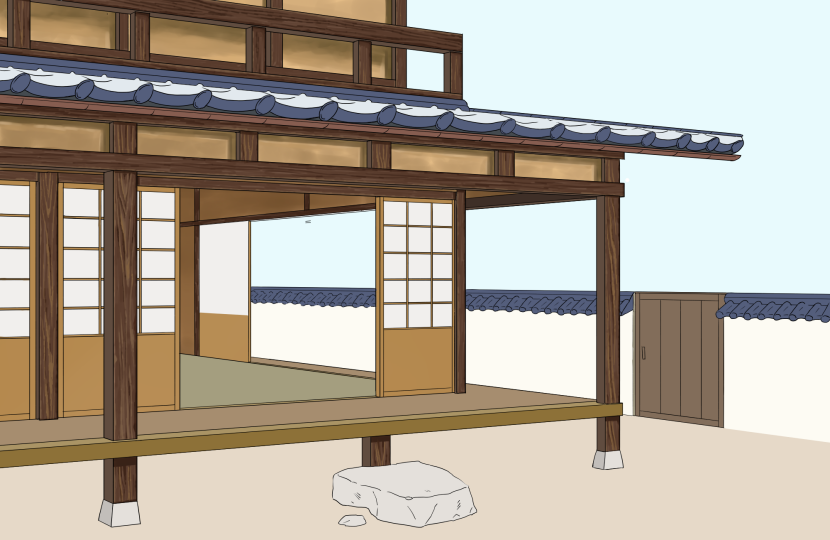
Get it right
Use a darker wood for the deck (Dark Oak or aged Spruce planks laid lengthwise) so it reads as oiled timber against the pale shoji — and wrap the engawa around a corner so it frames the garden from two sides.
A house built around its engawa
A single-storey house with a loft, its deep dark roof carried on a stone bracket-beam, and an engawa running the full front.
This worked example puts the whole chapter together. The engawa is not added at the end — the house is laid out around it. The deck wraps the long, garden-facing side, the roof oversails it to keep it sheltered, and every front room opens onto it through a shoji bay.
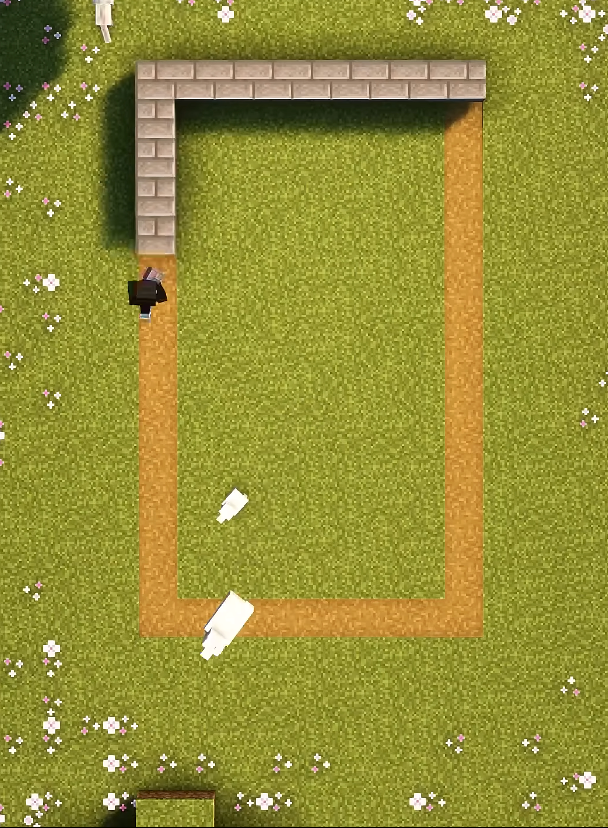
The footprint, marked out first.
The footprint
A long rectangle — roughly 8 wide by 14 deep, including the one-block engawa strip down the front. Start it as a dirt outline on a low stone-brick base so you can walk the rooms before building up. Keep it one clear storey plus a loft tucked under the roof.
Materials used

Roof
dark deepslate + chiseled

Walls
white plaster / quartz

Frame
dark oak posts & beams

Eave beam
stone brick brackets

Engawa
stripped oak + trapdoors

Base
stone-brick podium
Building it, step by step
Six stages from bare ground to finished roof. Notice the engawa goes in early — it sets the line everything else follows.
1 Mark the footprint as a long rectangle of dirt on a low stone base, and start the back wall.
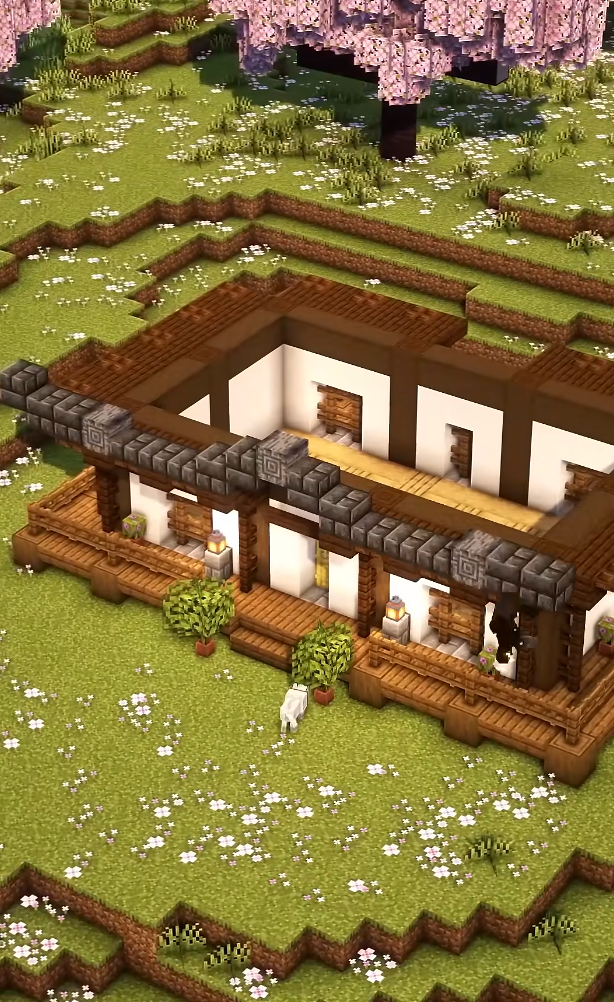
2 Stand the dark-oak posts and run the stone bracket-beam (masu-gumi) the deep eaves will rest on.
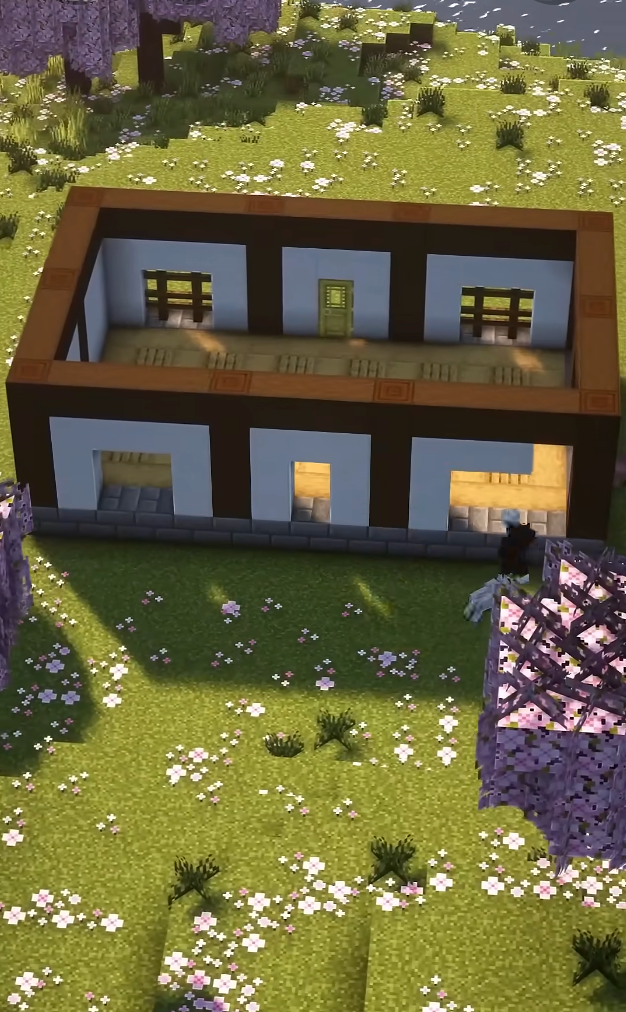
3 Fill the bays: white plaster walls, shoji windows in a dark-oak lattice, lanterns between.
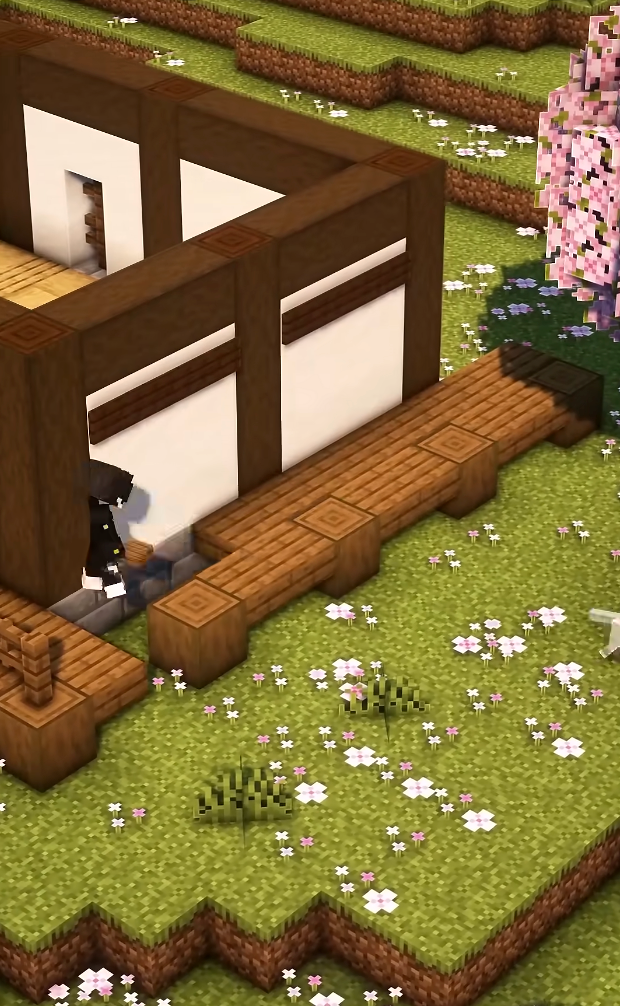
4 Lay the engawa — stripped-oak planks edged with chiseled blocks, raised one block off the ground.
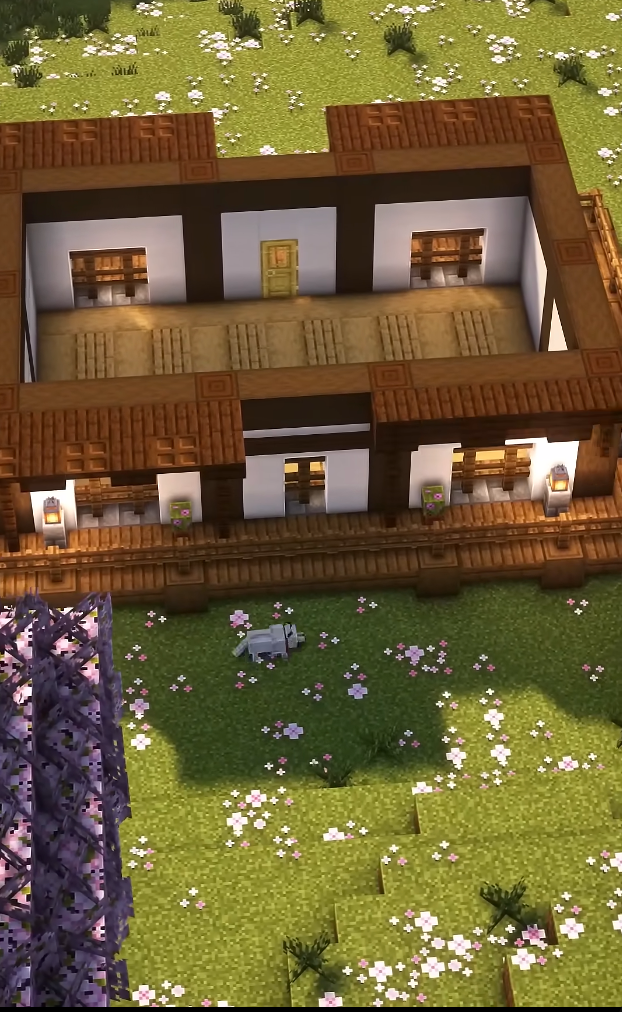
5 Frame the loft storey and its openings; the engawa beam wraps the garden-facing front.
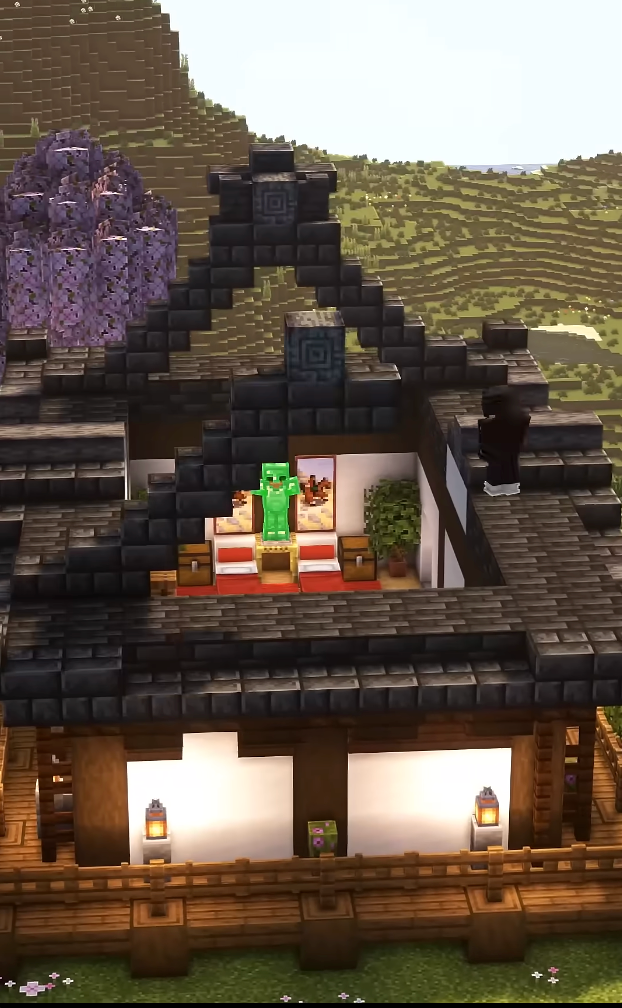
6 Cap it with the dark, deep-eaved roof and chiseled gable accents — then furnish the loft.
SHOJI & TATAMI
Walls made of paper and light; floors measured in mats.
Walls of paper and light
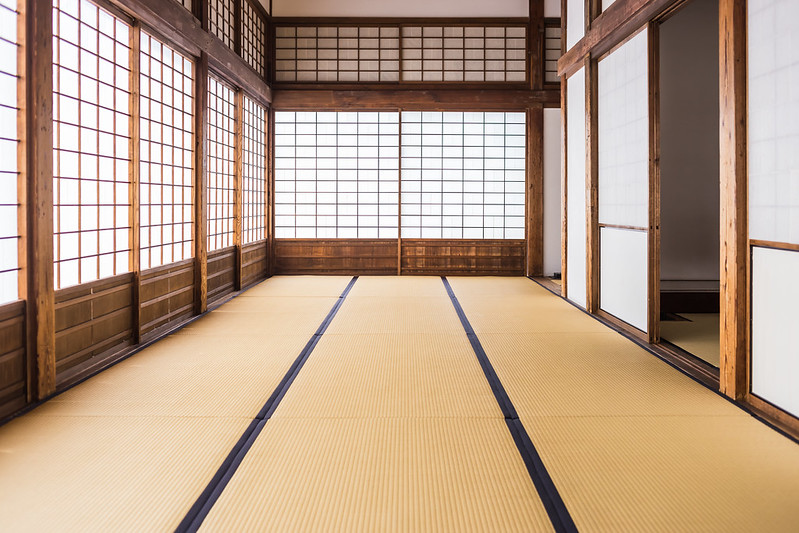
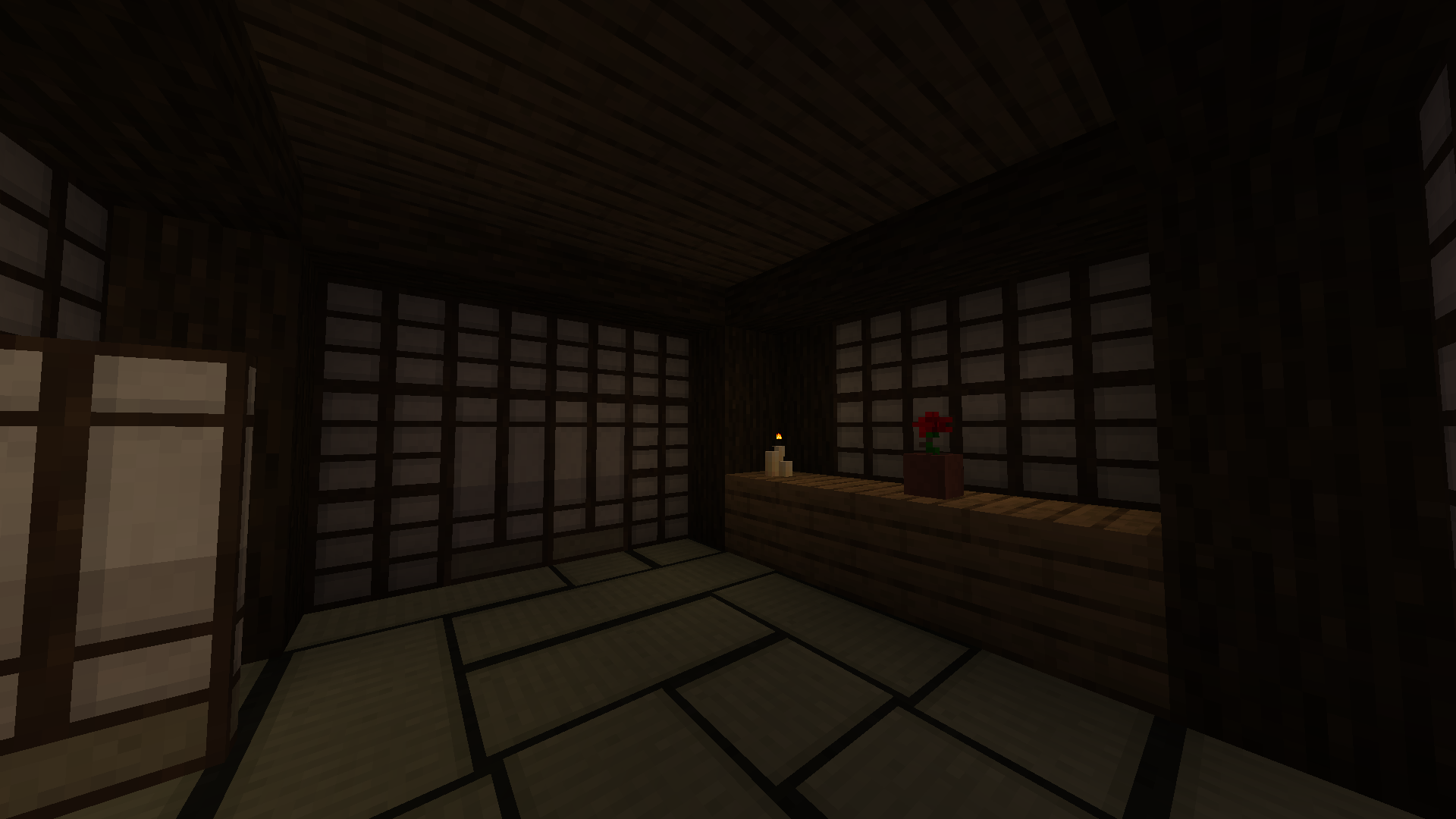
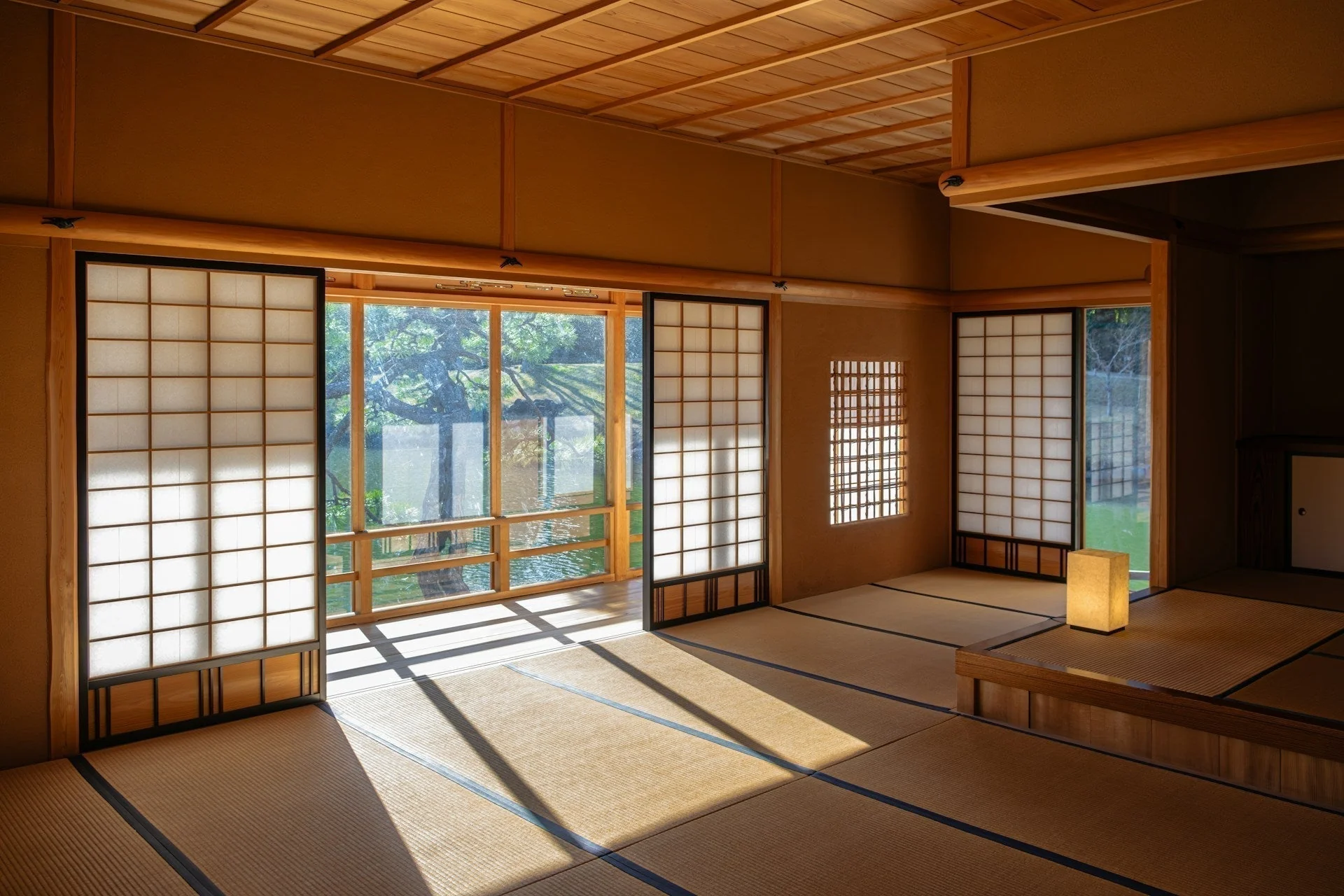
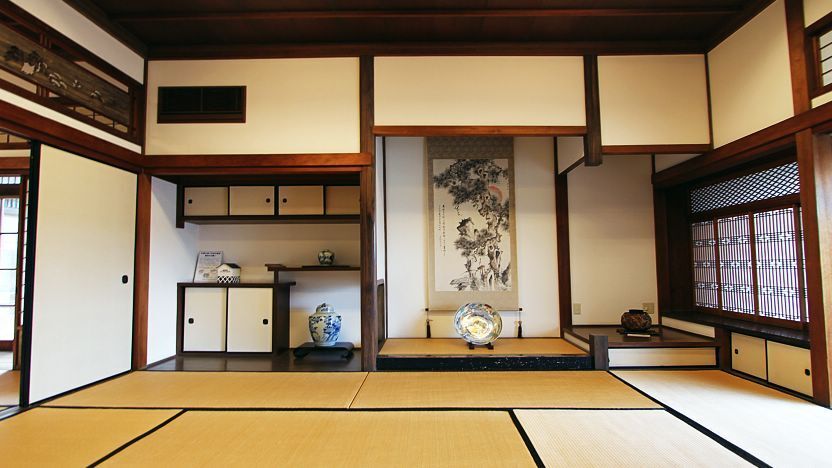
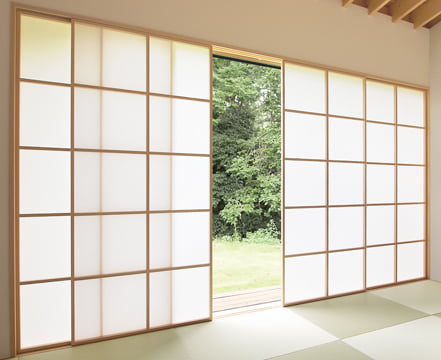
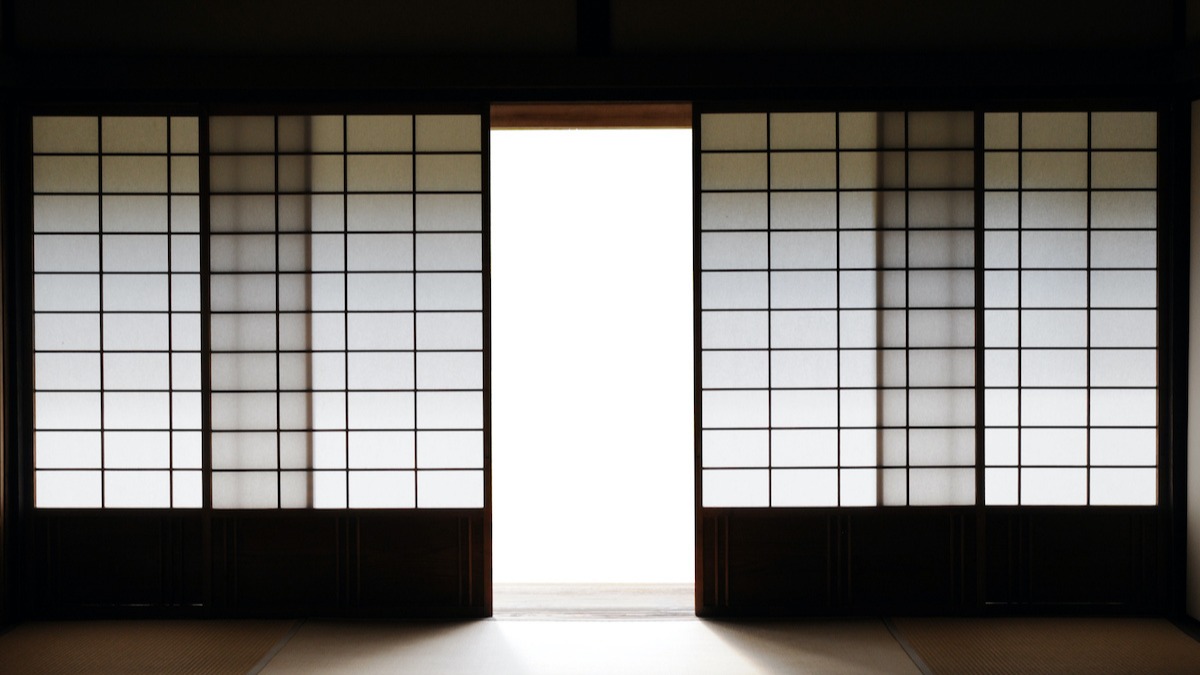
Shoji are sliding screens of a thin wooden lattice (kumiko) faced with translucent washi paper. They don't block light — they soften it, turning hard daylight into the even, glowing wash that gives a tatami room its calm. Slide them aside and a wall simply vanishes.
Their opaque cousins, fusuma, are paper-covered panels used to divide rooms — close them for privacy, lift them out to merge two rooms into one. Together they make the Japanese house endlessly reconfigurable: the same space becomes one room or four, bright or shaded, open or closed.
Build it as
 White Glass Pane · the paper
 Trapdoors / Fences · lattice
 Bone Block · fusuma panel
Crisper paper?
A texture pack can give true shoji panels with a fine lattice and warm paper glow:
↓ THE "SHOJI" PACKON CURSEFORGE
The mat that measures the room
Tatami are thick mats of woven rush (igusa) over a firm core, edged with a dark cloth border (heri). Every mat is the same fixed 1:2 proportion — so rooms aren't measured in metres but in mats: a tea room is 4½, a standard room 6 or 8. The mat is the module the whole house is tuned to.
The way they're laid matters too: mats are arranged in a staggered, auspicious pattern that never lets four corners meet at one point. That quiet discipline is exactly the proportion lesson from the grid chapter — made physical underfoot.
Build it as
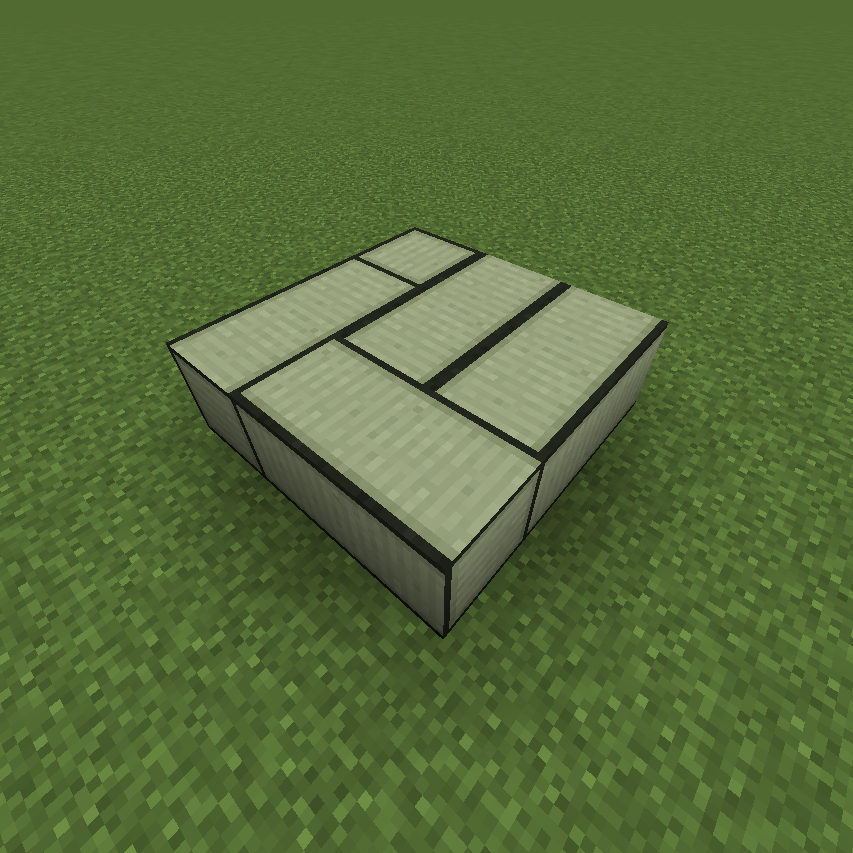
 Moss / pale wool · the mat
 Black carpet line · the heri
Lay tatami as 1×2 blocks of one pale tone, then score the seams with a thin line of a darker block. Keep rooms to whole-mat counts (6, 8, 12) and the floor reads instantly Japanese.
PRINCIPLES
The unwritten rules — empty space, restraint, proportion and light — that make a Japanese room feel calm.
Ma — the power of empty space
Ma (間) is the interval — the charged pause between things. In a Japanese house, an empty patch of floor is not unused; it is what lets the room breathe, reset, and change its job through the day.
This is the single hardest idea for Minecraft builders to accept, because the game whispers "fill it" at every turn. A bare room looks unfinished, so we add a table, a bookshelf, three flower pots, a banner. Stop. In this tradition, the open floor is the design. A room that is eighty percent empty reads as deliberate and quiet. A room crammed with detail reads as nervous.
Leave a real courtyard (a tsuboniwa) — even a 3×3 gap with gravel, a single tree, and a stone lantern. The void makes the surrounding rooms feel intentional, and it gives interior windows something to look at.
Restraint & material honesty
A traditional house shows you what it's made of: timber that looks like timber, plaster that looks like plaster, stone that looks like stone. Nothing pretends to be something else, and the palette is small enough that the eye relaxes.
In Minecraft this becomes a hard rule: limit your palette and let texture do the work. The single biggest tell of an amateur build is too many block types fighting on one wall. Pick a wood for structure, a lighter surface for walls, a dark material for the roof, and a stone for the base. That's four. Everything else is an accent used sparingly.
A disciplined starting palette
Stripped Dark Oak — posts Spruce Planks — floorsBone Block — plaster wallsDeepslate Tiles — roofCobblestone — base
Notice these blocks already read as wood, plaster, tile and stone. You're not faking materials — you're choosing honest ones and trusting them. Swap the species to suit your biome (acacia and sandstone for a warm region; spruce and andesite for a cold one) but keep the same four roles.
Proportion & the grid
Real Japanese rooms are measured in tatami — mats of a fixed 1:2 proportion. Rooms are sized in whole mats: four-and-a-half, six, eight. The whole house sits on one invisible module, and that is why the spaces feel coherent.
Minecraft already gives you a perfect grid — the block. Use it the way tatami is used: build rooms as clean rectangles in tidy block counts, and let a repeating bay rhythm run along the walls. A bay every 3 blocks, marked by a post, instantly reads as timber-frame architecture.
Rooms in 1:2 or 3:4 rectangles
e.g. 5×7, 6×8, 7×9. Avoid near-squares; they feel static.
Odd widths center the door
A 7-wide wall has a true middle block — openings sit symmetrically.
A post every 3 blocks
The repeating bay is the rhythm that says "timber frame".
Keep storeys low. A ceiling of 3 blocks (plus the floor) reads human-scaled and traditional. Tall rooms feel European. If you want grandeur, get it from a sweeping roof, not from height.
Light, shadow & threshold
A Japanese house never blasts light in. It filters it — through paper screens, under deep eaves, across an engawa — so the interior stays soft and shadowed. The boundary between inside and outside is never a single hard line; it is a series of gentle steps.
You can build this rhythm of light directly:
Soul lanterns and soul torches give a cooler, calmer light than the orange default — excellent for a restrained interior. Use ordinary lanterns outside by the entrance for warmth.
Site & borrowed scenery
A Japanese house is never an object dropped on the land — it's tuned to it. Shakkei (借景), "borrowed scenery", means the building is arranged so a distant mountain, a tree, or a stretch of water becomes part of the composition you see from inside.
Before you commit a footprint, look at what's already there. Point the main rooms and the engawa at the best view. Let a slope become a raised platform. Let a river edge become the reason the house faces the way it does. The garden, the water, and the path are not decoration added at the end — they're half the building.
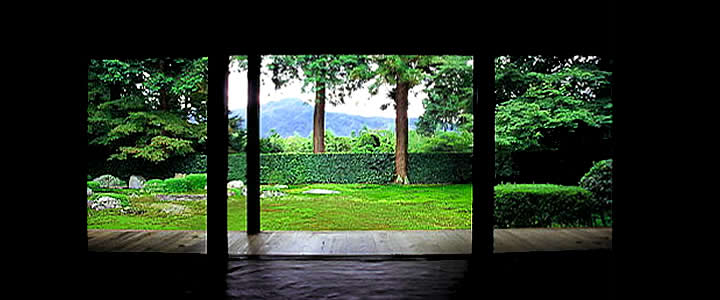
A house works with its site, not on top of it — the view from the engawa is part of the design.
THE SHELL
The roof, the raised base and the bones that give the house its silhouette.
The roof — the whole game
If a viewer only sees one thing, it's the roof. It is most of the silhouette, it casts the shadow that makes the walls read, and it's where almost every "Japanese" build succeeds or fails. Get this right and a plain box underneath still looks the part.
The three things that matter
1 · Deep eaves
The roof must overhang the wall by 2–3 blocks. The deeper the overhang, the more "Japanese" it reads — this is the number-one thing beginners cut too short.
2 · A gentle, fine pitch
Mix stairs and slabs so each "tier" rises by a half-block. A roof of full-block stairs at 45° looks chunky; half-stepping gives a finer, flatter slope.
3 · The upturned edge
Flick the very last row of eaves upward with an inverted stair. That subtle lift is the signature curve — you only need one block of it.
For the full step-by-step — including hip-and-gable (irimoya) roofs and bracket detailing — see the build tips on the next pages. Good roof blocks: Deepslate Tiles, Dark Prismarine, Cobbled Deepslate, or Dark Oak stairs and slabs.
The raised base
Real houses lift their timber floor off the damp ground on a stone podium, with air moving underneath. You don't have rot to worry about, but the raised base is what stops your house looking like it was stamped flat onto the terrain. It gives the building a foot to stand on.
A one-block stone base with a recessed shadow line reads instantly as a raised timber floor.
Inside: tokonoma & irori
The tatami floor sets the grid (see the Shoji & Tatami chapter). On top of it, two small moves give the bare room its focus and its warmth — without ever filling it.
Tokonoma alcove
A shallow recess one block deep with a single object — a hanging item-frame "scroll" and one flower in a pot. One focal point, nothing else.
Irori hearth
Sink a Campfire into the floor inside a square stone rim, with a hanging chain and cauldron above. Instant warm centre for a rural minka.
BUILD IT
Step by step, from marking the footprint to flicking up the final eave.
Build order: footprint & frame
Work from the ground up in this order and the house almost designs itself. Don't skip ahead to walls before the frame stands.
Mark the footprint flat
Outline rooms on the ground in a cheap block. Keep rectangles in clean odd counts and leave the engawa strip and any courtyard as gaps.
Lay the stone podium
Raise the whole footprint 1–2 blocks on cobble or stone brick. Inset the timber floor one block and skirt with trapdoors.
Stand the posts
Place a stripped-log post at every corner and every 3 blocks along the walls — 3 to 4 blocks tall. This is your bay rhythm.
Ring the top with a beam
Run a continuous log beam across all the post tops. This is the line the roof and eaves will spring from — get it level and the rest is easy.
Block out the roof — now
Before you fill any walls, rough in the roof mass and eaves so you can judge the silhouette. Walls and screens come last, fitted between the posts.
Building the roof, tier by tier
Overhang first. Extend the eave beam 2–3 blocks past the wall on every side. This ledge is the bottom of the roof.
Half-step up. From the eave edge, alternate a slab then a stair as you climb inward, so each tier rises half a block — a gentle pitch, not a steep one.
Lift the corner. At the very edge, place one upside-down stair so the eave flicks up. That single block is the famous curve.
Cap the ridge. Run a darker full-block row along the very top, with a short vertical "ridge end" at each gable.
For the grandest look, hip the lower roof on all four sides, then pop a small gable (a triangular wall) out of the top slope. The little gable with a decorative timber screen is the calling card of temples and fine houses.
Brackets (masu-gumi): under the deepest eaves, tuck short stair or fence "brackets" between the wall and the overhang. They visually carry the roof and add the layered shadow that makes it look engineered, not floating.
Walls, screens & windows
With the frame and roof up, the walls are just infill between the posts. That framed-panel logic is what makes it read as timber architecture rather than a painted box.
Vary the bays with rhythm, not randomness: e.g. solid · shoji · solid · shoji along a wall. Repetition with one interruption (a door, the tokonoma) is what calm looks like.
Garden, water & surroundings
The garden is not landscaping you add at the end — it's the other half of the house. The same restraint applies: a few deliberate elements, lots of raked emptiness.
Karesansui — dry garden
A bed of Gravel or pale Sand with two or three mossy Andesite "islands". Rake lines are implied by the calm.
Water & stepping stones
A still pond with Lily Pads, a single arched bridge, smooth-stone steps crossing it.
Planting
Cherry & Azalea for blossom, Bamboo for screens, Moss & Podzol for the ground. Restraint here too — three species, not ten.
Punctuation
A stone lantern (toro), a bamboo fence, a torii gate at the approach. One each — these are accents.
REFERENCE
Block palettes, worked examples and the mistakes to avoid.
The master palette
A complete kit organised by role. Pick one block per role for a clean build; the right column shows a warm-region swap.
Structure & surfaces
Stripped Dark Oak · postsSpruce Planks · floorBone Block · plasterSmooth Sandstone · alt wallRoof & base
Deepslate Tiles · roof Dark Prismarine · roof altCobblestone · base
 Mud Bricks · base alt
Screens, detail & garden
White Glass Pane · shoji Spruce Trapdoor · latticeMoss Block · tatami/garden
 Gravel · dry gardenCherry Leaves · blossom
The Riverside Minka
A single-storey farmhouse — deep thatched roof, wrap-around engawa, open to a pond.
This build leads with the roof: a broad, low-pitched sweep with eaves overhanging nearly three blocks, throwing the walls into shadow. The footprint is a simple 7×11 rectangle with a 1-wide engawa wrapping two sides — the long edge faces the water so every interior bay borrows the view.
Inside, a single open tatami room with one tokonoma alcove does the whole job. The restraint is the point — nothing competes with the roofline and the pond beyond.
AT A GLANCE
Footprint
7 × 11 blocks
Roof
Hipped, deep eaves
Storeys
One (3-high)
Difficulty
Intermediate
The details that sell it
Six close-ups worth studying — the roof corner, the engawa edge, the shoji wall, the entry, the alcove, and the garden approach.
The upturned eave — one inverted stair does it.
Raised deck with trapdoor skirt and shadow line.
Alternating solid and screen bays, lit from within.
One scroll, one flower — the room's only focal point.
Stepped entry with a noren banner over the door.
Stepping stones, lantern, and the pond beyond.
This two-page spread is the layout for every worked example. Builds 02 (urban machiya) and 03 (hillside villa) drop straight into copies of it — swap the hero shot, the description, the stats, and the six detail shots.
Six mistakes that break the look
Eaves too shallow.
The overhang is the whole effect. One block isn't enough — push it to two or three.
Too many block types.
Nine woods on one wall is the amateur tell. Hold the line at four roles.
Over-decorated interiors.
Banners, pots and item frames on every surface kill the calm. Empty floor is the design.
A whole wall of clear glass.
Reads as a greenhouse. Use white panes broken by a wooden lattice.
House stamped flat on the ground.
Without the raised stone base it looks dropped in. Give it a foot to stand on.
No garden, no site.
A Japanese house without its garden is half a building. Plan them together.
"Don't build a Japanese-looking box. Build the decisions a Japanese house makes — and let the look take care of itself."
Now go build one. Start with the roof, keep the palette tight, and leave the rooms emptier than feels comfortable.
LEARN JAPANESE ARCHITECTURE
minecraftcircle-generator.com
Get the full Minecraft Magazine PDF
The same 39-page magazine, as a clean printable PDF you can keep on your phone or tablet while building. No site chrome, no ads, no scrolling — just the guide, page by page.
Get the Magazine PDF — $5One-time payment · Instant PDF download · 14-day refund guarantee